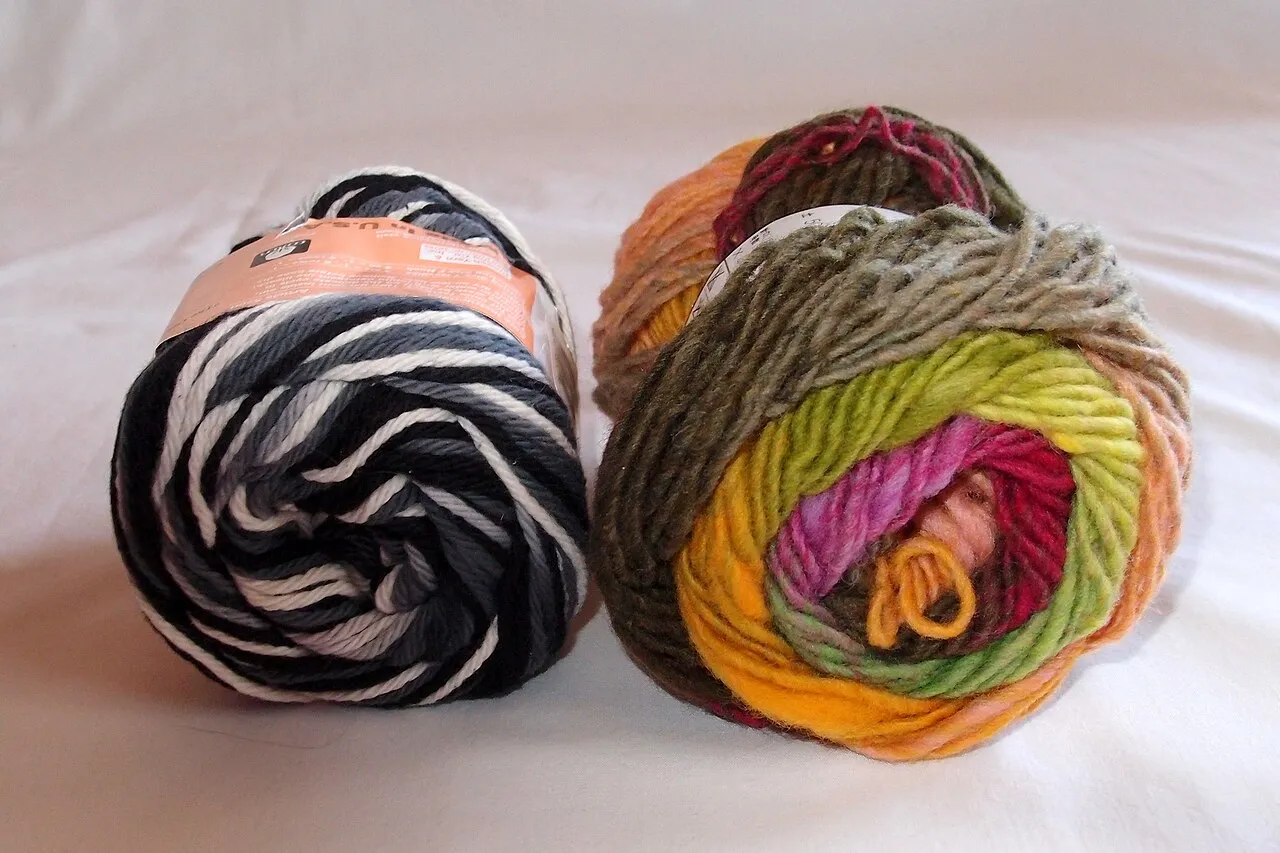
Crochet is one of the cheapest crafts to try. One hook and one ball of yarn will carry you through your first chains, single crochet rows and a finished dishcloth. The catch is that the wrong yarn can make learning much harder than it needs to be. Here's what to buy, in order, and why.
Start with the yarn
For learning, choose medium weight (#4) yarn, often called worsted. The number comes from the Craft Yarn Council's weight system, printed on most US yarn labels as a small skein symbol. Worsted is thick enough to see each stitch clearly and thin enough to handle comfortably.
Three more things help:
- A light, solid color. Dark or variegated yarn hides the stitches you're trying to count.
- A smooth yarn. Avoid fuzzy, fluffy, eyelash and very loosely twisted yarns until you can find your stitches without looking hard.
- Something cheap. You'll pull out your first rows more than once.
Red Heart Super Saver in Soft White ticks all of those boxes. It's acrylic, widely sold and machine washable, and the label suggests a 5.5 mm hook. If you'd rather start with dishcloths, Lily Sugar'n Cream cotton is the classic choice. Cotton doesn't stretch much, so it can feel stiffer on the hook, but it's absorbent and stands up to the washing machine.
Then match the hook
US crochet hooks carry a letter and a metric size, for example H-8 (5 mm) or I-9 (5.5 mm). The metric number is the one to trust, because the letter-to-millimeter match isn't identical across every brand. Check your yarn label: it usually lists a suggested hook size, and that's where to start.
If you think you'll stick with it, a set saves buying hooks one at a time. The Boye ergonomic set has twelve hooks with soft rubber grips, from 2.25 mm up to 10 mm, so it covers thread-weight projects through bulky yarn. Ergonomic handles like these are a matter of taste; some people find them easier on the hand during long sessions, while others prefer a plain inline hook. If you only want to buy one hook to learn on, a 5 mm or 5.5 mm will suit most worsted yarn.
The small stuff
- Stitch markers. Locking markers, such as Clover's 20-pack, clip into a stitch and stay put. Mark the first stitch of each row or round and you'll stop accidentally adding or losing stitches. A safety pin works in a pinch.
- A yarn needle. A blunt needle with a large eye for weaving in ends. Clover's Chibi set has bent tips that slip under stitches easily and comes in a small case.
- Small scissors. Any sharp pair will do.
- A tape measure. Useful as soon as you try a gauge swatch or a hat.
US vs UK crochet terms
This catches nearly every beginner. The US and UK use the same stitch names for different stitches. A US single crochet is a UK double crochet, and a US double crochet is a UK treble. Patterns written in the US use US terms, and most say so near the top. If a pattern looks strangely loose or tight, check which system it uses. If you follow UK patterns, CraftingUK's crochet pages use UK terms throughout.
A sensible first week
- Practice a foundation chain until the chains look even.
- Work rows of single crochet. Count your stitches at the end of every row.
- Try double crochet, which grows faster and feels like real progress.
- Make a dishcloth: it's small, square and useful even if the edges wobble. We have a step-by-step first crochet dishcloth project.
Reading a pattern
Crochet patterns use abbreviations, such as ch for chain, sc for single crochet and dc for double crochet, plus brackets or asterisks for sections you repeat. Most patterns list the abbreviations near the start. The number at the end of a row, often in parentheses, is the stitch count you should have. Check it every row while you're learning. It's the quickest way to catch a missed or extra stitch before it throws off the shape.
After that, a hat or a simple scarf is a good next step. For a quick win, super bulky yarn like Lion Brand Wool-Ease Thick & Quick works up fast on a large hook, so a cowl can be finished in an evening or two. It's harder to see stitches in bulky yarn, though, so save it for after you're comfortable.
Knitting instead?
The shopping list is similar: worsted yarn in a light color, plus needles in the size the label recommends. Our Knitting & Crochet department explains needle types and sizes. UK readers will find UK yarn shops and sizes at Craft Shop Direct UK.
Products mentioned in this post
Specific products, checked daily on Amazon.com. Out-of-stock items are hidden automatically.
Red Heart
Super Saver Yarn, Soft White
Budget-friendly #4 worsted acrylic, the weight most beginner hat, scarf and blanket patterns are written for.
$3.49 on Amazon.com when we checked on November 28, 2026. Prices change; check the listing.
View on AmazonLily
Sugar'n Cream Cotton Yarn, 6-Pack Assortment
100% cotton worsted in six colors, the classic pick for dishcloths, potholders and other things that get washed a lot.
$26.95 on Amazon.com when we checked on November 28, 2026. Prices change; check the listing.
View on AmazonBoye
Ergonomic Crochet Hook Set, 12 Hooks, 2.25 to 10 mm
Twelve hooks with soft rubber grips, from a fine 2.25 mm up to 10 mm for bulky yarn.
View on AmazonClover
Locking Stitch Markers, 20 Pack
Clip-on markers that open and close, so they can mark the first stitch of a crochet round or a dropped knit stitch.
$6.40 on Amazon.com when we checked on November 28, 2026. Prices change; check the listing.
View on AmazonClover
Chibi Bent Tip Tapestry Needle Set
Bent-tip yarn needles in a little case, for weaving in ends and seaming knitted or crocheted pieces.
$7.79 on Amazon.com when we checked on November 28, 2026. Prices change; check the listing.
View on AmazonLion Brand
Wool-Ease Thick & Quick Yarn, Oatmeal
Super bulky #6 acrylic and wool blend that knits up fast on big needles, so a first scarf or cowl doesn't drag on for weeks.
View on AmazonAs an Amazon Associate we earn from qualifying purchases. Product links go to Amazon.com.
Pro tip: Keep the yarn label. It has the fiber content, care instructions, suggested hook size and the dye lot, which matters if you need to buy more of the same color.